
BLOG
The Future of Digital Marketing Agencies in the Age of AI
The digital marketing landscape is undergoing its most significant transformation since the internet revolution. Artificial intelligence is no longer a futuristic concept—it’s reshaping how agencies operate, deliver value, and define their competitive advantages. As AI tools become increasingly sophisticated and accessible, marketing agencies face both unprecedented opportunities and existential questions about their role in the […]
The digital marketing landscape is undergoing its most significant transformation since the internet revolution. Artificial intelligence is no longer a futuristic concept—it’s reshaping how agencies operate, deliver value, and define their competitive advantages. As AI tools become increasingly sophisticated and accessible, marketing agencies face both unprecedented opportunities and existential questions about their role in the ecosystem.
The AI Revolution: Automation Meets Creativity
Digital marketing agencies have always been early adopters of technology, but AI represents something fundamentally different from previous innovations. Unlike tools that simply made existing processes faster, AI is beginning to perform tasks that were once the exclusive domain of human creativity and strategic thinking.
Today’s AI can write compelling ad copy, generate eye-catching visuals, analyse consumer behaviour patterns, optimise bidding strategies in real-time, and even predict campaign performance with remarkable accuracy. Tools that once required specialised teams can now be operated by individuals with minimal training. This democratisation of marketing capabilities is forcing agencies to reconsider what they’re actually selling.
From Execution to Orchestration
The most successful agencies are already pivoting from being primarily execution shops to becoming strategic orchestrators of AI-powered marketing ecosystems. Rather than competing with AI tools on speed or volume, forward-thinking agencies are positioning themselves as the essential human layer that knows which tools to use, how to combine them effectively, and how to ensure the output aligns with brand values and business objectives.
This shift mirrors what happened in other industries that faced automation. Just as financial advisors evolved from stock pickers to wealth strategists when algorithmic trading emerged, marketing agencies are transitioning from campaign executors to marketing architects. The value proposition is moving upstream—from doing the work to knowing what work needs to be done and why.
The Hybrid Model: Humans and Machines Working Together
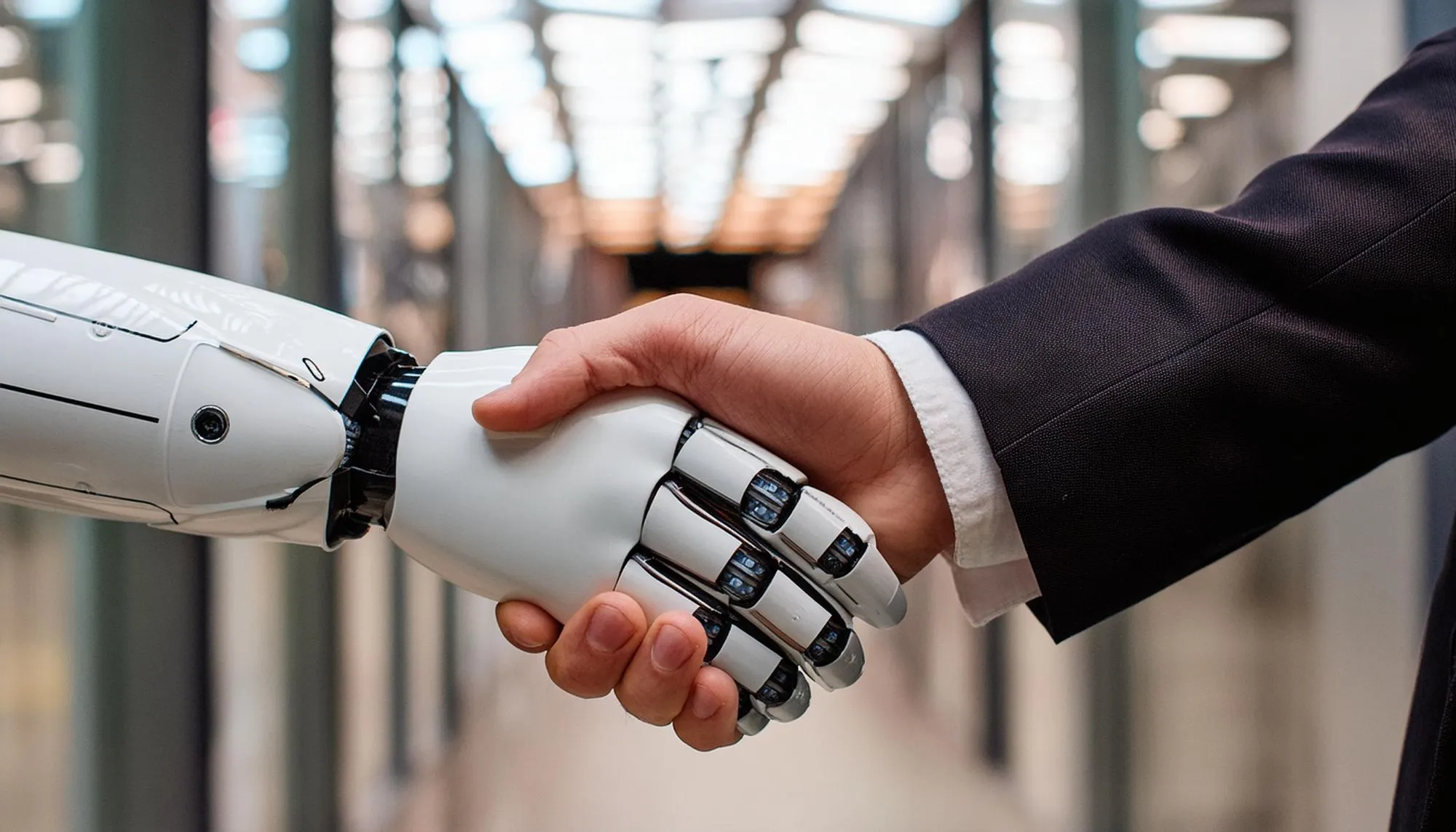
The future isn’t about AI replacing marketers, but rather about creating powerful hybrid models where human creativity, strategic thinking, and emotional intelligence are amplified by AI’s processing power, pattern recognition, and tireless optimisation capabilities.
In this model, AI handles data analysis, audience segmentation, A/B testing at scale, personalisation across thousands of customer touchpoints, and real-time campaign adjustments. Meanwhile, human marketers focus on brand strategy, understanding cultural nuances, making ethical decisions, building client relationships, and creating the breakthrough creative ideas that AI can then help optimise and deploy.
The most effective agencies will be those that develop proprietary methodologies for this human-AI collaboration. They’ll create frameworks for when to trust AI recommendations and when to override them based on context that algorithms might miss. They’ll build processes that use AI to handle the “heavy lifting” while preserving space for the creative intuition and strategic insights that remain distinctly human.
Specialisation Over Generalisation
As AI commoditises general marketing capabilities, agencies will need to specialise more deeply. The days of being a jack-of-all-trades agency may be numbered. Instead, we’re likely to see agencies carve out distinctive positions based on vertical expertise, proprietary data assets, or unique approaches to AI integration.
Some agencies might specialise in highly regulated industries like healthcare or finance, where their expertise in navigating compliance while leveraging AI becomes invaluable. Others might focus on specific channels, developing deep expertise in AI-powered voice search optimisation or immersive experiences in virtual environments. Still others might differentiate through proprietary AI models trained on unique datasets or through breakthrough creative capabilities that set them apart from AI-generated mediocrity.
The Data Advantage
In an AI-powered marketing world, data becomes even more valuable as a competitive moat. Agencies that have access to proprietary first-party data, historical campaign performance information, or unique audience insights will be able to train AI models that deliver superior results compared to generic, off-the-shelf solutions.
This is driving new partnership models and data-sharing arrangements. Agencies are exploring ways to pool anonymised performance data to build better predictive models, negotiate data access rights as part of client agreements, and develop proprietary measurement frameworks that provide insights competitors can’t replicate.
The Transparency Challenge
As marketing becomes increasingly driven by AI algorithms, agencies face a growing challenge around transparency and explainability. Clients want to understand why certain decisions are being made, how their budgets are being allocated, and what’s actually driving results—but many AI systems operate as “black boxes” that make it difficult to provide clear explanations.
Agencies that can demystify AI for clients, provide clear reporting on how automated systems are performing, and maintain genuine transparency around the role of AI in their work will build stronger, more trusting client relationships. This requires not just technical knowledge but also the communication skills to translate complex algorithmic processes into business language that stakeholders can understand and act upon.
Ethics and Brand Safety in the AI Era
The speed and scale at which AI can generate and deploy marketing content create new risks around brand safety, cultural sensitivity, and ethical marketing practices. We’ve already seen examples of AI generating problematic content, making biased audience targeting decisions, or creating campaigns that technically perform well but damage brand reputation.
Future-focused agencies are establishing themselves as ethical guardrails in the AI marketing ecosystem. They’re developing frameworks for responsible AI use, creating review processes to catch potentially problematic content before it goes live, and helping clients navigate the complex ethical considerations of AI-powered personalisation and targeting.
This ethical oversight role represents a genuine value-add that AI alone cannot provide. Algorithms can be trained to avoid certain types of content, but understanding the nuanced cultural context and potential reputational implications of marketing decisions requires human judgment informed by experience and empathy.
The Talent Transformation
The skillsets that agencies need are changing dramatically. While creative and strategic thinking remain crucial, agencies now also need team members who can work effectively with AI tools, understand data science concepts, and bridge the gap between technical capabilities and marketing strategy.
This is creating a new generation of “AI-native” marketers who think in terms of training data, model performance, and algorithmic optimisation while also maintaining the creative instincts and strategic acumen that have always defined great marketing. Agencies that can attract, develop, and retain this hybrid talent will have a significant competitive advantage.
We’re also seeing agencies hire roles that didn’t exist five years ago: AI ethicists who ensure responsible use of automated systems, prompt engineers who specialise in getting the best results from generative AI tools, and data scientists who can build custom models for specific marketing challenges.
The Boutique Renaissance
Interestingly, the AI revolution may actually benefit smaller, specialised agencies rather than just consolidating power in the hands of large players. Because AI tools are increasingly accessible and affordable, boutique agencies can now deliver capabilities that once required massive teams and budgets.
A small team with deep expertise and smart use of AI tools can compete effectively against much larger agencies for certain types of work. This is enabling a new wave of specialised boutiques that combine human expertise in narrow domains with AI amplification to deliver exceptional results without the overhead of traditional full-service agencies.
Client Relationships Redefined
As the tactical execution of marketing becomes more automated, the nature of agency-client relationships is evolving. Clients need agencies less for their ability to execute campaigns and more for strategic partnership, industry expertise, and guidance through the rapidly changing marketing technology landscape.
This means agencies need to position themselves as long-term strategic partners rather than vendors providing specific services. The relationship becomes more consultative, with agencies helping clients build their own AI capabilities while also providing ongoing strategic guidance and specialised expertise that in-house teams can’t replicate.
The Road Ahead
The transformation of digital marketing agencies through AI is still in its early stages. We’re likely to see continued disruption and evolution over the coming years. Some traditional agencies will fail to adapt and will be displaced by AI-native competitors. Others will successfully reinvent themselves around new value propositions that combine human strategic thinking with AI-powered execution.
The agencies that thrive will be those that embrace AI not as a threat but as a powerful tool for delivering better results for clients. They’ll invest in both technology capabilities and the human talent needed to deploy those capabilities strategically. They’ll develop clear points of view on when to use AI and when to rely on human creativity and judgment. And they’ll help clients navigate the opportunities and challenges of this new era with transparency, expertise, and strategic vision.
The future of digital marketing agencies isn’t about choosing between humans or AI—it’s about creating powerful combinations of both that deliver results neither could achieve alone. The agencies that understand this and build accordingly will define the next era of marketing excellence.
By Matrix Internet