

BLOG
The Complete Guide to Vetting Your Web Development Agency
BEFORE YOU SIGN: Questions to Ask, Standards to Set, and Red Flags to Watch For Choosing a web development agency is one of the most consequential decisions a business can make. A misaligned partnership can mean wasted budgets, delayed launches, and a final product that fails to serve your customers or reflect your brand. Yet […]
BEFORE YOU SIGN:
Questions to Ask, Standards to Set, and Red Flags to Watch For
Choosing a web development agency is one of the most consequential decisions a business can make. A misaligned partnership can mean wasted budgets, delayed launches, and a final product that fails to serve your customers or reflect your brand. Yet many businesses sign contracts after little more than a portfolio review and a friendly sales call.
This guide gives you the questions you must ask before committing — and the standards you should demand throughout the engagement — to ensure that any agency you hire is genuinely capable of delivering a solution that fits your business model.
Part 1: Questions to Ask Before Signing
1. Experience & Track Record
An agency’s past work is your clearest window into future performance. Generic claims about “passion for digital” mean very little. What matters is documented evidence that they have delivered results for businesses like yours.
Questions to ask:
- Can you show me three to five case studies from clients in my industry or with similar business models?
- What were the measurable outcomes of those projects — traffic, conversions, load times, revenue?
- Have you built solutions with the same core features my project requires (e-commerce, membership portals, booking systems, etc.)?
- What is the tenure of your team? Do senior developers stay, or is the agency reliant on rotating junior staff?
- Can I speak directly with two or three former clients as references?
|
Why this matters: Agencies that cannot produce verified outcomes from past projects are asking you to fund their learning curve. Reference calls are non-negotiable — a confident agency will welcome them. |
2. Team Structure & Who Will Actually Build Your Product
The team you meet during the sales process is rarely the team that builds your product. Clarifying who will actually work on your project — and in what capacity — prevents a bait-and-switch situation.
Questions to ask:
- Who will be the lead developer on my project, and can I meet them before signing?
- What percentage of the work is completed in-house versus outsourced to subcontractors or freelancers?
- If work is subcontracted, where are those developers based, and who manages their quality?
- What is your policy if my lead developer leaves mid-project?
- Will I have a dedicated project manager, or will I be communicating with multiple people?
|
Why this matters: Subcontracting is not inherently bad, but undisclosed subcontracting often leads to communication gaps, inconsistent quality, and accountability problems when things go wrong. |
3. Technology Choices & Fit for Your Business
A capable agency recommends technology based on your specific needs, not based on which platform they are most comfortable with or have a commercial partnership with.
Questions to ask:
- What technology stack do you recommend for this project, and why does it suit my specific requirements?
- Are you recommending this stack because it’s right for me, or because it’s what you primarily work in?
- What are the long-term licensing and hosting costs associated with this technology?
- Is the solution open-source, proprietary, or a SaaS platform? What are the exit costs if I want to migrate later?
- How will this technology scale as my business grows? What are the performance ceilings?
- What content management experience will my team have — can non-technical staff update the site independently?
|
Why this matters: Being locked into a proprietary CMS or a bespoke framework that only one agency knows how to maintain is an enormous long-term risk. Ownership and portability of your own product should be non-negotiable. |
4. Project Management & Process
Poor project management is the single most common cause of web projects going over budget and over deadline. Understand exactly how the agency runs its engagements before you commit.
Questions to ask:
- What project management methodology do you use (Agile, Scrum, Waterfall, or hybrid)?
- What does the typical project timeline look like for a project of this scope?
- How are scope changes handled? What is the process for requesting changes, and how are they priced?
- What tools will we use to track progress (Jira, Asana, Basecamp, etc.), and will I have direct access?
- How frequently will I receive progress updates, and what do those updates include?
- What are the key milestones, and what are the consequences if the agency misses them?
|
Why this matters: Scope creep and hidden change-order fees are among the most common ways web projects blow their budgets. A well-defined process with client visibility protects both parties. |
5. Design Process & Brand Alignment
Your website must represent your brand and serve your customers — not showcase the agency’s aesthetic preferences. Understanding the design process reveals whether they will genuinely engage with your business model.
Questions to ask:
- How do you conduct discovery? Will you invest time understanding our customers, competitors, and conversion goals?
- How many design concepts or wireframe iterations are included, and how many revision rounds?
- What happens after I exceed the included revision rounds?
- Do you conduct user testing or usability research as part of the process?
- How do you approach accessibility (WCAG compliance)?
- Will the design be built as a reusable component system, or as one-off custom pages?
6. Quality Assurance & Testing
Testing is the stage most commonly cut when projects run over time or budget. Establish explicit QA standards before signing.
Questions to ask:
- What devices, browsers, and screen sizes do you test on, and can you provide a testing matrix?
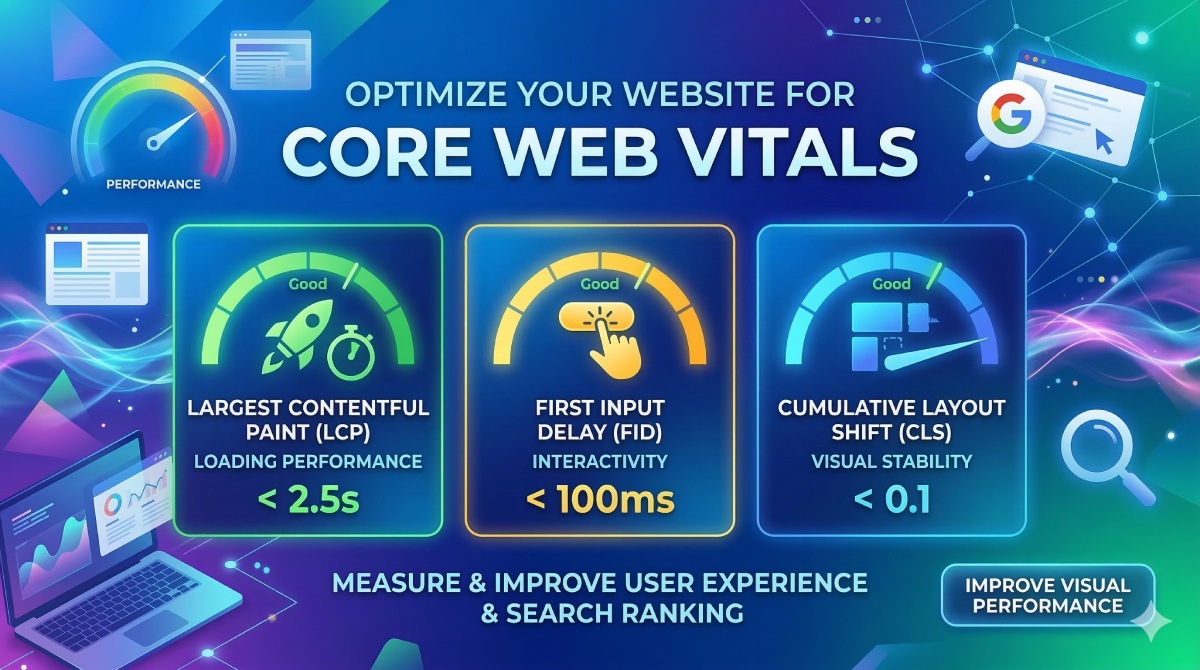
- Do you perform performance testing (Core Web Vitals, load speed), and what are your acceptable thresholds?
- How is security tested, particularly for e-commerce or user data collection?
- Do you use automated testing, manual testing, or both?
- What is your defect-tracking process, and who is responsible for resolving post-launch bugs?
- Is there a defined UAT (User Acceptance Testing) phase where my team validates the build?
7. Ownership, IP, and Data Rights
This is where many business owners are caught off guard. Contracts can be structured in ways that leave the agency — not you — owning key parts of your digital product.
Questions to ask:
- Who owns the code, design assets, and database upon project completion and final payment?
- Are any third-party components, licensed themes, or proprietary frameworks included that restrict my ownership?
- Will I receive the full source code, or only access to a deployed build?
- What are the terms around the agency reusing design components or code from my project for other clients?
- Who owns the domain, hosting accounts, and third-party service accounts? Are they registered in my name?
|
Why this matters: If the agency retains ownership of your code or registers your domain in their name, you are at their mercy if the relationship breaks down. Every account and asset should be registered to your business from day one. |
8. Ongoing Support, Maintenance & Handover
Launch day is not the end of the project. Understanding what happens after go-live is as important as the build itself.
Questions to ask:
- What post-launch support is included, and for how long?
- What is your SLA (Service Level Agreement) for responding to critical bugs or downtime?
- What does ongoing maintenance cover, and what are the costs?
- Will you provide documentation and training so my team can manage the site independently?
- If I decide to move to a different agency in the future, what does the handover process look like?
9. Pricing, Payment Terms & Contract Clarity
Ambiguous pricing is a leading source of disputes. Every cost should be itemised, and every payment trigger should be clearly defined before you sign.
Questions to ask:
- Is the pricing fixed-fee or time-and-materials? What are the risks of each for a project of this scope?
- What does each line item in the quote cover? Are there any likely add-ons not reflected in this estimate?
- What are the payment milestones, and are they tied to deliverable approvals?
- What are the terms for project pauses, cancellations, or disputes?
- Are there any recurring costs (platform licences, hosting, plugin subscriptions) not included in the project fee?
Part 2: Standards to Set Before Work Begins
Asking the right questions is only half the job. The other half is establishing enforceable standards — written into the contract or a formal Statement of Work — that define what “delivered” actually means.
1. Define Success Metrics Upfront
A quality solution is one that achieves your business objectives — not just one that looks good and loads correctly. Before a single line of code is written, agree in writing on what success looks like.
- Specific performance benchmarks: page load under 2.5 seconds on mobile, Core Web Vitals in the ‘Good’ range.
- Conversion or engagement targets: defined baseline metrics and expected improvement ranges.
- Accessibility standard: WCAG 2.1 Level AA compliance as a contractual requirement, not a nice-to-have.
- SEO foundation: structured data, sitemap, canonical tags, and redirect mapping from old URLs included in scope.
2. Establish a Formal Discovery Phase
Agencies that skip discovery and jump straight to design are designing for themselves, not for your customers. Require a discovery deliverable — a written brief, user personas, or a technical specification — that must be signed off before design begins. This document becomes the benchmark against which the final delivery is measured.
3. Require Milestone-Based Sign-Offs
Payment should be tied to approved deliverables, not to arbitrary calendar dates. Structure the project so that you formally approve each phase — wireframes, visual design, staging build — before work progresses and before the next invoice is raised. This gives you leverage and ensures the agency seeks your genuine approval, not just a rubber stamp.
4. Mandate a Staging Environment
Require that all development takes place on a staging server that mirrors the live environment. No code should be deployed directly to your production site. The staging environment should be accessible to your team throughout the project, not just at the end, so you can identify issues early rather than discovering them post-launch.
5. Set Device and Browser Testing Standards
Define the minimum testing matrix in the contract. At minimum, this should include the latest two versions of Chrome, Safari, Firefox, and Edge on desktop, plus testing on iOS Safari and Android Chrome at multiple screen sizes. If your analytics data shows significant traffic from other browsers or devices, add those to the requirement.
6. Require a Security Baseline
For any site collecting user data, processing payments, or running on a database-driven CMS, specify security requirements explicitly:
- SSL/TLS certificate is correctly configured.
- All CMS software, plugins, and dependencies on current stable versions at launch.
- No default credentials, test accounts, or debug modes active on the production server.
- Basic protection against SQL injection, XSS, and CSRF attacks as a minimum standard.
- GDPR or relevant data protection compliance built into the design, not bolted on as an afterthought.
7. Insist on Full Documentation and Knowledge Transfer
Before making the final payment, require the delivery of a complete handover pack including: full source code in a repository you own, hosting and infrastructure credentials, documentation covering the system architecture and any non-standard configurations, and a training session for your team on how to use and maintain the CMS. An agency that resists providing full documentation is an agency that profits from your dependency.
8. Define a Warranty Period
Require a minimum 30 to 90-day warranty period post-launch during which the agency resolves any bugs or defects at no additional cost. Bugs discovered post-launch that are attributable to the original build — not to content changes made by your team — should fall within the scope of the original contract.
Part 3: Red Flags That Should Give You Pause
- They cannot produce verifiable client references or case studies with measurable outcomes.
- The contract gives the agency intellectual property rights over the code or design until a specific ongoing fee is maintained.
- There is no discovery phase — they are ready to start design immediately without understanding your business.
- They resist providing a staging environment or milestone sign-off process.
- The quote is a single lump sum with no itemised breakdown of deliverables.
- They register your domain, hosting, or third-party accounts in the agency’s name.
- They cannot clearly explain why they are recommending a particular technology stack for your needs.
- There is no defined process for how scope changes are handled and priced.
- Post-launch support is described vaguely, with no SLA or defined response times.
- They are unwilling to put performance benchmarks or quality standards in writing.
Conclusion
A credible web development agency will not be threatened by these questions — they will welcome them as a sign that you are a serious client who values quality. The agencies most likely to resist transparency around process, ownership, and measurable standards are precisely the ones you should avoid.
Take the time to document everything discussed in the sales process. If an agency makes a verbal commitment, ask for it to be included in the Statement of Work. The contract and SOW are your primary protection — what is not written down does not exist.
Your website is not a cost centre. It is a business asset. Treat the procurement process accordingly, and you will significantly increase your chances of receiving a solution that genuinely serves your customers and supports your long-term business goals.
By Matrix Internet